
2 things about arriving in Shanghai changed recently, and both of them affect how long you stand in a queue.
The paper arrival card is being phased out. On my most recent flight in, the airline did not hand one out at all. And the time immigration takes depends a lot on when your flight lands and whether you have been fingerprinted in China before. I have landed at Pudong 3 times under different conditions, and the gap between the best and worst case was wide.
What this guide is based on
I have arrived at Shanghai Pudong 3 times: December 2024 (Terminal 1, JAL, evening), March 2025 (Terminal 2, daytime), and April 2026 (Terminal 2, ANA, evening). Pudong is one of several Chinese airports I have entered through, but this guide is built specifically from those 3 Pudong arrivals, since Pudong is what it covers.
I travel on a Japanese passport. That is worth saying plainly and early, because immigration is the one part of a trip where your passport changes what actually happens to you. The visa rules that apply, the questions you get asked at the booth, and even the language those questions arrive in are all tied to the document in your hand. This is a Japanese passport holder’s experience of arriving at Pudong, and you should adjust for that as you read.
I have used Hongqiao Airport only for departures. I have never landed there, so I do not cover arrivals at Hongqiao in this guide.
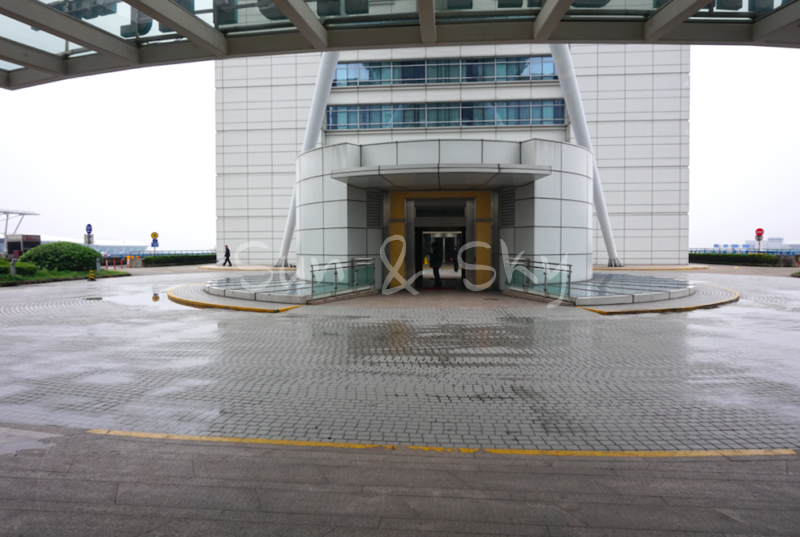
Photography is generally not allowed in the immigration area in China, and I did not attempt to take any. The photos in this guide are from the hotel I stayed at.
Official rules below are marked with the date I checked them. Everything else is what happened to me.
Quick answer
- Fill in the arrival card online before you fly. The window opens 72 hours before arrival.
- The only official site is s.nia.gov.cn. If a site asks you to pay, it is not the official one.
- If you did not fill it in before flying, you can still do it at the airport. You are not stuck.
- First-time visitors to China give fingerprints. Add time for it.
- A daytime landing at Pudong was much faster for me than an evening one.
- Check the visa rules for your own passport. Mine is not yours.
The arrival card is now online
The arrival card became an online form on 20 November 2025. It applies to foreign travelers entering China by air, land or sea, and the window to complete it opens 72 hours before you arrive. (Checked July 2026.)
The official page is s.nia.gov.cn/ArrivalCardFillingPC on a computer, and s.nia.gov.cn/ArrivalCardFillingPhone on a phone. You can also use the NIA Government Service Platform, the “NIA 12367” app, or the WeChat and Alipay mini programs.
Read the next part carefully, because this is where money gets taken from travelers.
The National Immigration Administration has published its own warning about fraudulent arrival card websites, and asks travelers to use only its official channels or the QR code it provides. That notice is here. The official service is free. If you search in English for “China arrival card” and land on a page that wants a card number, close it.
2 things reduce the panic here.
First, if you cannot complete the form in advance, you can submit the information after you land, either by scanning the QR code on site with your phone or by using the smart terminals in the inspection area. Paper arrival cards also remain available at ports of entry. When I landed in April 2026, there was a large poster with the QR code on it in the arrivals area. You do not have to know about any of this in advance to get through.
Second, some travelers are exempt entirely. The exempt categories include holders of the Foreign Permanent Resident ID Card, non-Chinese holders of the Mainland Travel Permit for Hong Kong and Macao Residents, group visa holders, and passengers in direct transit within 24 hours who do not leave the port-restricted area, among others. That last one matters if you are only changing planes.
What I saw on the ground matches the phase-out. My flights in December 2024 and March 2025 still involved paper. On the ANA flight in April 2026, no paper card was distributed on board at all. I would plan on the assumption that no one will give you a piece of paper.
Fingerprints: the first visit is different
I registered my fingerprints in December 2024, on my first arrival of these 3. On the 2 arrivals after that, I only had to put my passport on the reader. No fingerprint step.
This is the part where most guides quote someone else’s timing at you. If you have never given fingerprints in China, your first arrival will take longer than mine did in March 2025, and you should not use my 36 minutes as your plan. Add time. I should say plainly that my one slow arrival also happened to be Terminal 1 and an evening landing, so I can’t isolate the fingerprint step from those 2 factors with only 3 data points.
What they ask you at the booth
I was asked questions at the booth on my most recent arrival, and looking down the row, so was almost everyone else. These were the questions:
- Do you speak Chinese?
- What is the purpose of your visit?
- How many days are you staying?
- Where are you staying?
- Are you meeting anyone?
- Do you have Chinese friends?
- What are you going to do here on your own?
Most of those I had already answered in the online arrival card. The purpose, the length of stay, and the address were all in the form. Repeating them out loud only makes sense as a consistency check, so answer them the same way you filled them in. Know the name of your hotel before you reach the booth.
The last 2 questions were not in the form. My own guess is that those exist to check whether a solo trip declared as tourism holds up, though I can’t confirm that’s the actual reason.
Your list will not necessarily match mine. Which questions you get, and how many, depends on your passport and your stated purpose. Treat this as a sample of the kind of thing that gets asked, not as a script to rehearse.
The interview was conducted in English. I did not need Chinese for it. At Xi’an, I have had questions come through as recorded Japanese audio, because of my passport. I cannot tell you which languages are available at which airport, but I got through in English every time.
I was not asked for a health declaration in April 2026. I would not turn that into a promise that no one will ask you for one.
How long it actually took: 3 arrivals
Same airport, 3 arrivals, very different experiences.
December 2024, Terminal 1, evening arrival, first fingerprint registration. I queued about 30 minutes at immigration alone.
March 2025, Terminal 2, daytime arrival, already registered. 36 minutes from the wheels touching down to standing outside the airport. That is the whole thing: taxiing, walking, immigration, baggage, customs, and out.
April 2026, Terminal 2, evening arrival, already registered. From clearing immigration to being in my hotel room took a little over an hour, including baggage and the walk to the hotel. This one needs a real caveat: I had priority baggage claim on that flight (immigration itself was not fast-tracked), so my own bag likely came out faster than a typical passenger’s would. If you are not flying with priority baggage status, I would budget more time for this step than my number suggests.
Put the first 2 side by side and you get the useful comparison. On an evening arrival, I spent 30 minutes in the immigration queue alone. On a daytime arrival, I was outside the airport in 36 minutes total.
Evening flights into Pudong are busier than daytime ones. That is my own observation across these arrivals, not an official statistic, and I only have Terminal 1 in the evening once, so I cannot separate the terminal from the time of day cleanly. But if you have a choice between an afternoon and a late-evening arrival, and you care about how you feel at the end of the day, I would take the afternoon one.
After immigration
You collect your checked bags and pass through customs before you reach the public area. If you are connecting onward within China, you still do this.
In April 2026 I stayed at the hotel above the transportation center at Pudong and paid CNY 500, tax included, for the night. Walking there from arrivals is short and stays indoors, which is the whole reason to use it after a late landing. I have written about that hotel separately, and the review is linked below.
See also: Da Zhong Airport Hotel review
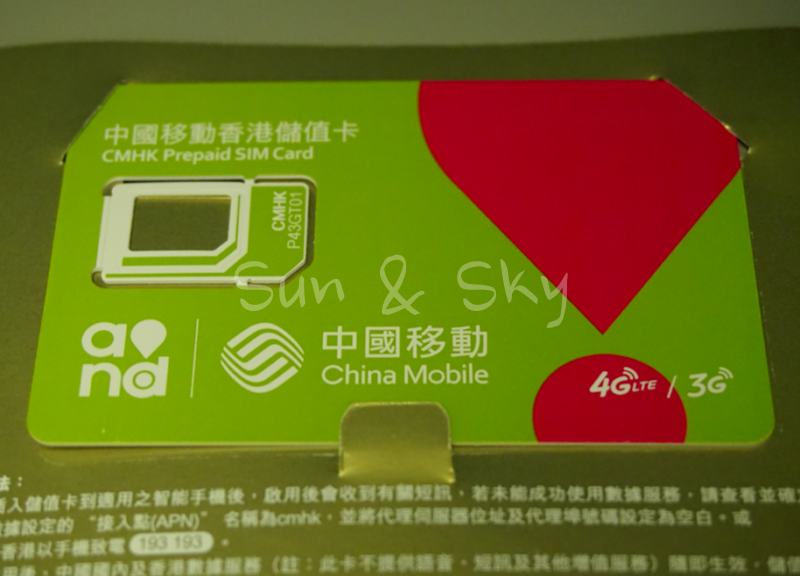
If you are heading straight into the city or across to Hongqiao, you will want a working data connection before you leave the terminal, since the maps and payment apps you will use in China all need one. I have covered the Maglev, Metro Line 2, and getting to nearby cities by car in a separate guide to getting from Pudong into Shanghai, linked below.
>>Check current eSIM options for China on KLOOK
What I cannot tell you
I have never arrived at Hongqiao, so I cannot describe immigration there. Hongqiao takes international flights from nearby countries, so if that is where you land, this guide covers the paperwork but not the building.
I have also never entered China on visa-free transit. I enter on a visa exemption that applies to my passport and not to every reader of this site, and those rules change. Check the current requirements for your own passport with your nearest Chinese embassy or consulate, and check them before you book, not after.
Who this will be easy for
If you land at Pudong in the afternoon, you have been to China before, and you filled in the arrival card at home, this is a fast airport. 36 minutes from touchdown to the curb is not a story about a difficult border.
If you land in the evening on your first trip to China, plan differently. Expect 30 minutes in the immigration queue before anything else happens, expect a fingerprint step you have not done before, and do not book anything tight on the other side. Book a room near the airport instead and start the trip in the morning.