I found out the hard way that having Alipay and WeChat Pay set up isn’t overkill in China. It’s the difference between buying a bottle of water and standing at a counter while a shop owner waits for you to figure something out.
Here’s what actually happened, what I’d tell you to set up before you land, and where I still don’t have a clean answer.

Quick answer
- Set up both Alipay and WeChat Pay before your trip, and link an international card to each (I use a Wise card on both). Some places only take one of the two.
- For public transit, you don’t need a physical card. You can pay by scanning a QR code in either app.
- A physical transit card is still worth carrying as a backup, especially if you’re worried about your phone battery.
- WeChat Pay’s identity verification can require help from someone who already has a verified account. I can’t do this part for you, so plan for it before you go.
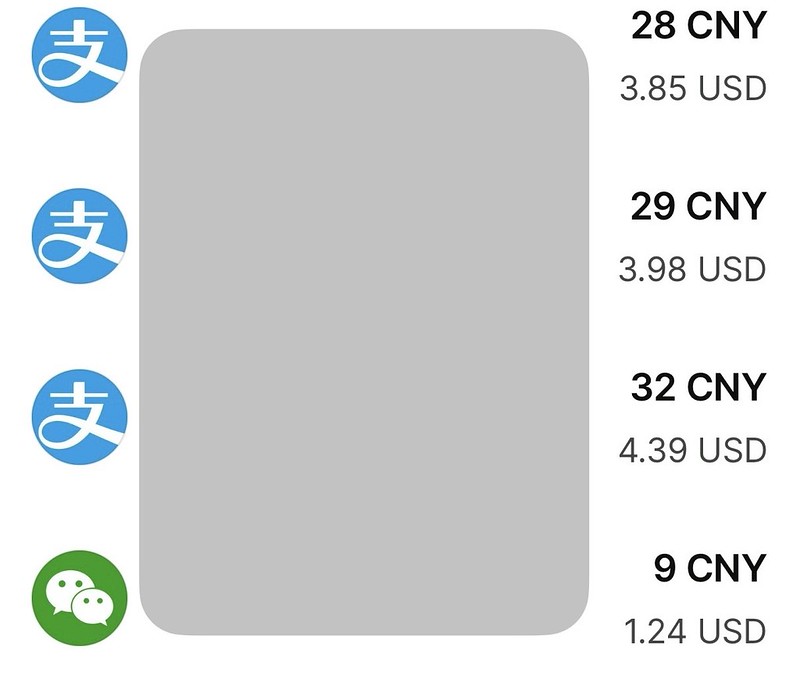
- Budget for a roughly 3 percent fee on card-linked payments over 200 RMB. That’s what I’ve been charged on both apps.
Getting Alipay and WeChat Pay set up
Both apps now let you link an international card and verify your identity without a Chinese phone number tied to a local bank. I linked a Wise card to both, and Alipay’s verification went through with no issues on my end.
WeChat Pay was a different story. When I set it up, I got stuck at the identity verification step and needed someone with an already-verified Chinese WeChat account to confirm my identity from their side. I didn’t have that option on my own, and I ended up asking someone local for help.
I’m flagging this clearly: if you hit the same wall, I can’t be the person who verifies you. That step needs someone who already has a verified WeChat account, in person or over the app, and it’s not something I can do remotely for a reader. Plan on having a friend, colleague, or hotel contact who can help if WeChat Pay gives you trouble.
Since I’ve hit setups where only one of the two apps worked at a shop, my advice is to get both running before you land rather than assuming one will cover you.
Paying for public transit
I’ve used three different ways to pay for the subway and the Maglev in Shanghai, and each one worked, with different trade-offs.
A physical transit card. On my first trip, I bought a physical transit card to ride the Maglev into the city. It cost 100 RMB total, paid in 10 RMB notes: a 20 RMB deposit plus 40 RMB toward the Maglev fare, and the remaining balance covered three more nights of getting around. I still have that card, and in December 2024 I reactivated it and used it again on Metro Line 2. As far as I can tell, this specific card only works within Shanghai; I haven’t tried using it in another city, so I can’t tell you whether it would work elsewhere. (China does have a nationwide transit card interconnection system in some cities, but I can only speak to how mine worked, which was Shanghai only.)
A transit card loaded onto your iPhone. On later trips, I used a transit card added to Apple Pay on my iPhone instead of carrying the physical card. Topping it up through Alipay was the easiest route I found. One real advantage: if you set the card as your Express Transit Card, it still works even if your phone’s battery dies or the phone is powered off.
Paying by QR code. I’ve also ridden the subway by scanning a QR code directly in Alipay and in WeChat Pay, without touching a physical card at all. This is probably the simplest option if you don’t want to deal with a card: you just open the app and scan at the gate. I haven’t used the official Shanghai Metro app itself for this.
If setting up Alipay and WeChat Pay sounds like more hassle than you want before a short trip, there’s a shortcut: KLOOK’s Mainland China Bus & Metro Card, a China T-Union card valid across 300+ cities, which you can arrange before you land and skip the app setup altogether. It’s also worth a look if you think you’ll be back: unlike the Shanghai-only card I’ve been using, this one works nationwide, so it carries over to your next trip instead of sitting in a drawer.
>>KLOOK Mainland China Bus & Metro Card
My honest take: the QR code option is the easiest to start with, but I’d still keep a physical card as a backup if your phone tends to run out of battery, since you’re relying on GPS and an active screen every time you tap in with an app.
Paying at small shops
This is where things got less predictable for me.
In October 2025, I tried to buy a bottle of water at what looked like a small tobacconist. Alipay wouldn’t go through. It looked like the shop was set up to receive personal transfers rather than standard merchant payments, and Alipay rejected it on that basis. WeChat Pay worked fine at the same counter.
Then in March 2026, at a noodle shop I’d paid at without any issue before, neither app worked. I tried Alipay, then WeChat Pay, and both failed. I ended up paying in cash.
I don’t have a clean explanation for either case, and I don’t have screenshots of the failures to show you exactly what went wrong. What I can tell you is that it happened more than once, at different shops, months apart, which is why I’d tell you not to assume either app is universally accepted. If one fails, try the other before you give up and reach for cash. And carry some cash anyway.
What it costs
On both Alipay and WeChat Pay, I’ve been charged a fee of about 3 percent on card-linked payments over 200 RMB. I can’t promise this is the rule in every situation, but it’s what I’ve consistently seen on my own transactions, so budget for it if you’re paying for anything larger with a linked international card.
Is this worth setting up for a short trip?
If you’re visiting China for a short trip, yes, I’d still set up both apps before you go. The setup itself, minus the WeChat Pay verification hurdle, doesn’t take long, and it solves more problems than it creates once you’re actually out and about. Just don’t expect either app to work everywhere, and don’t expect WeChat Pay’s verification step to go smoothly without help from someone who’s already set up.
If you’re only in the country for a day or two on a layover, a physical transit card and cash may be simpler than chasing down WeChat Pay verification. For anything longer than that, having both apps running is worth the setup hassle.